
AMOS Replicator
Reliable Ship-to-Shore Data Synchronisation for Maritime Fleets
Keep AMOS data moving between vessels and shore, even in the demanding connectivity environments of maritime operations.
Offline vessel operation
Rule-based data exchange
Scheduled and urgent transfers
Monitored replication
CONNECTED WITH CONFIDENCE
Keep Ship and Shore Connected
AMOS Replicator is SpecTec's ship-to-shore data synchronisation technology. Its rule-based replication exchanges data between AMOS databases, including remote vessel installations and shore-based systems, so ship and shore teams work from the same information.
Vessels can operate offline and exchange data with shore when connectivity is available. Replicator can replicate AMOS data across different application versions and database management systems, and is the data connection that keeps vessels, sub-offices and headquarters aligned.
Reliable data synchronisation between vessel and shore systems.







THE POWER OF AMOS REPLICATOR
Operate. Exchange. Monitor.
Three connected steps from offline vessel to synchronised fleet.

01 / OPERATE
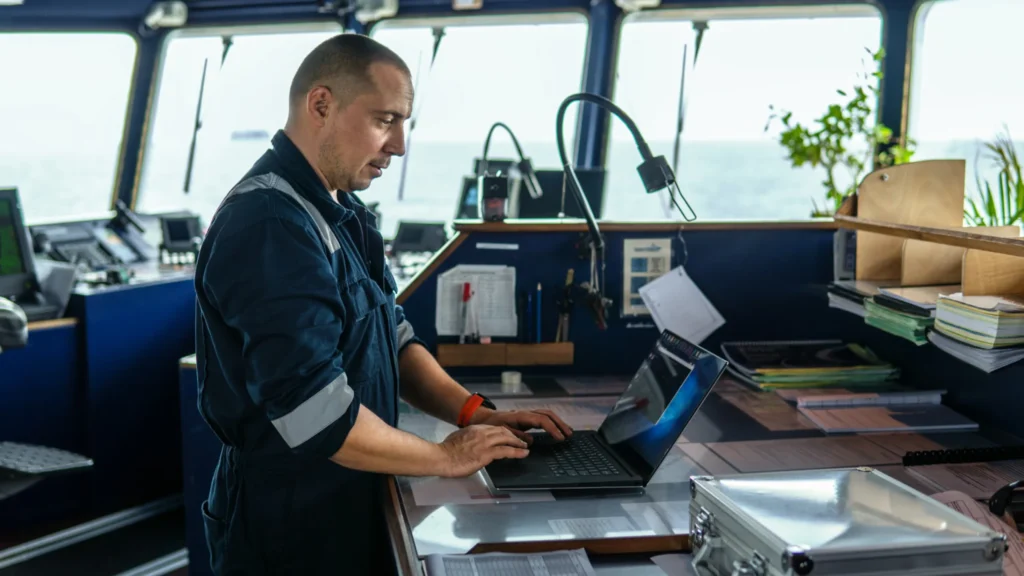
Operate offline
Vessels keep working locally, without depending on a continuous shore connection.

02 / EXCHANGE
Exchange by rule
Rules decide what moves and when, from scheduled bulk transfers to urgent records.
03 / MONITOR
Monitor replication
Follow imports, exports and replication history, with visibility of the process.
AMOS REPLICATOR FEATURES
The capabilities behind AMOS Replicator
Explore the tools that control how and when data moves between vessel and shore.
Cross-Database Replication
Replicate AMOS data across different application versions and database management systems, including SQL Server and Oracle.
Rule-Based Data Exchange
Control what is exchanged and when, using pre-defined or user-configurable rules, not indiscriminate database copying.
Scheduled Transfers
Cluster large volumes of records for exchange in off-peak time slots.
Urgent Data Priority
Exchange urgent information, such as priority orders and incident reports, as soon as it is ready.
Offline Export and Import Queues
Queue data where there is no connectivity, and resume exchange once a connection returns.
Flexible Data Transport
Transfer replication data by encrypted email attachment, FTP, SFTP or file system.
Replication Monitoring
Monitor imports, exports and replication history, giving technical teams visibility of the synchronisation process.
Adaptable Environments
Handle new database versions, schemas or transfer methods through updated drivers, without upgrading the application.
Vessels, Sub-Offices and Headquarters
Replicate between vessels, sub-offices and headquarters, whether your fleet runs on-premise, in the cloud or in a hybrid model.
On-board
Vessels keep operating without depending continuously on a shore connection, with data synchronising when connectivity is available.
Reports, logs, historical information and purchase requisitions flow from the vessel to shore.
Ashore
Shore teams see current operational information from across the fleet, without waiting for manual updates.
Maintenance and safety procedures, purchase orders and shipping information flow back to vessels.
WHY AMOS REPLICATOR
Why fleets run replication on AMOS
Keep vessel and shore data synchronised
Exchange AMOS data between distributed vessel and shore databases, so every team works from consistent information.
Support offline vessel
operations
Vessel environments operate offline and synchronise with shore through Replicator.
Manage maritime connectivity intelligently
Schedule larger exchanges for off-peak periods while urgent records move when ready. Automated scheduling gives near real-time visibility, subject to replication settings.
Monitor
replication
Monitor imports, exports and replication history, with clear visibility for technical teams.
What Our Customers Say
Fleets that run ship and shore on AMOS

We are truly satisfied with SpecTec’s service and professionalism throughout. Thank you for assigning the right team - it made the process smooth and efficient. We look forward to working with you on Phase 2.”

SpecTec has been a reliable and responsive partner throughout our relationship. Their technical expertise and proactive approach have helped us maintain stable AMOS operations and support our vessel and shore-based teams. We look forward to continuing our work together.”

Trusted by commercial fleets worldwide
3,000+
Active Vessels
40+
Years of Expertise
300+
Customers Worldwide
Recognised by leading classification societies


Ready to get ship-to-shore data under control?
Every fleet is different. We'll show you exactly how AMOS fits yours.
FAQs
AMOS for Ship-to-Shore Synchronisation
1. What is AMOS Replicator?
SpecTec's ship-to-shore data synchronisation technology. It uses rule-based replication to exchange data between AMOS databases, including remote vessel installations and shore-based systems.
2. How does AMOS synchronise data between ship and shore?
Replicator exchanges data between vessel and shore AMOS databases according to rules, so both sides stay aligned without the vessel depending continuously on a shore connection.
3. Can AMOS work offline onboard a vessel?
Yes. Vessels operate offline and synchronise with shore through Replicator when connectivity is available.
4. What data can AMOS Replicator synchronise?
Operational information flows from vessels to shore, including reports, logs, historical information and purchase requisitions. In the other direction, vessels receive maintenance and safety procedures, purchase orders and shipping information.
5. Can data transfers be scheduled?
Yes. Large volumes of records can be scheduled and clustered for off-peak time slots, while urgent information such as priority orders and incident reports can be exchanged when ready.
6. How can Replicator data be transferred?
By email attachment, FTP, SFTP or file system, depending on what suits each vessel and shore environment.
7. Can Replicator transfers be monitored?
Yes. Users can monitor import and export processes and review replication history.
8. Is Replicator suitable for low-bandwidth connections?
Yes. Larger exchanges can be scheduled for appropriate windows, and urgent information exchanged when ready, which suits maritime connectivity.
9. Does Replicator work across different database versions and systems?
Yes. It can replicate AMOS data across different application versions and database management systems.
10. How does Replicator fit with the rest of AMOS?
It is the synchronisation layer that connects distributed AMOS environments, keeping capabilities such as Maintenance, Procurement and Inventory aligned across ship and shore.
Explore the full AMOS asset management platform
Data Analytics
Turn fleet and operational data into insight for performance and cost control.
EXPLORE DATA ANALYTICSMaintenance
Planned maintenance with fleet-wide visibility, compliance control and asset reliability.
EXPLORE MAINTENANCEExplore the full AMOS platform
VIEW ALL CAPABILITIES


FAQs
General Questions About AMOS™
1. What is an Asset Management Operating System (AMOS), and how does it work in the maritime industry?
AMOS is a comprehensive software solution designed for ship owners and operators to manage vessel operations efficiently. It centralises maintenance, procurement, inventory, and compliance processes, improving planning, tracking, and optimisation to enhance efficiency and reduce costs.
2. How does AMOS improve operational efficiency for ship owners and operators?
AMOS automates routine tasks, provides real-time data insights, ensures regulatory compliance, and streamlines maintenance scheduling and inventory management. This reduces downtime and operational costs.
3. Can AMOS be customised to meet the unique needs of my fleet?
Yes, AMOS offers hundreds of configuration options to adapt the software to the customers’ processes and that’s why customisable modules and workflows are tailored to fleets of any size, from small operations to global enterprises.
4. What are the core modules included in AMOS?
Core modules include Maintenance Management, Procurement, Inventory Tracking, Quality Assurance, and Compliance. Additional features like Fleet Analytics and Reporting are also available.
5. Is AMOS suitable for small fleets, or is it designed for large-scale operations?
AMOS is scalable, making it suitable for both small and large fleets. Its functionality can be tailored to meet different operational needs.
6. How does AMOS ensure compliance with international maritime regulations?
AMOS maintains accurate records of maintenance, certifications, inspections, and audits. These records can be accessed during regulatory checks to ensure compliance.
7. Can AMOS be integrated with other fleet management or financial systems?
Yes, AMOS integrates with Enterprise Resource Planning (ERP) systems, crewing software, and accounting tools for seamless operations.
8. How does AMOS handle real-time data from vessels?
AMOS collects real-time data from onboard systems and IoT devices, providing shore-based teams with instant insights into asset conditions and operational status.
9. What training is required for my team to effectively use AMOS?
Basic training is typically provided, covering key modules and workflows. Advanced training may be required for customisations or integrations.
10. Is AMOS accessible remotely for ship managers and operators?
Yes, cloud-enabled AMOS solutions allow secure remote access for real-time monitoring and management.


